By Kureeba David and Joan Nanteza
Community-led conservation is taking root in Rwabagoma, village, Kitenga sub-county Mubende district, where residents are restoring degraded wetlands and protecting remaining natural forests through practical, locally driven actions. The shift is being propelled by targeted support from the National Association of Professional Environmentalists (NAPE) whose intervention has equipped community groups with the tools needed to act decisively. At the center of this effort is the removal of eucalyptus trees planted in the wetlands. For years, the fast-growing trees had drained water from the swamps, reduced biodiversity, and undermined the natural water filtration functions of the ecosystem.
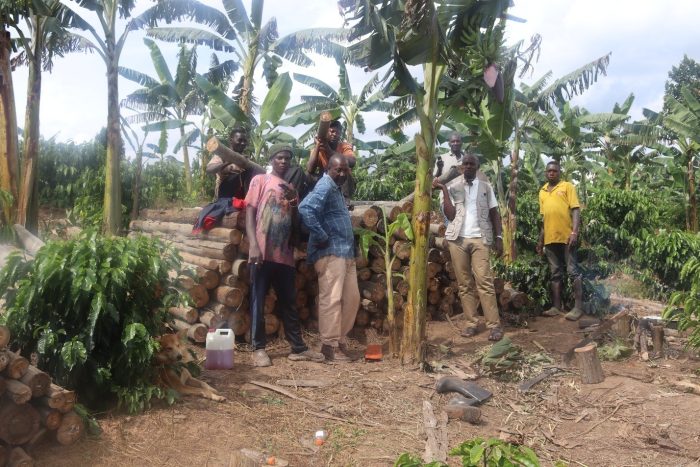
NAPE provided equipment including pangas, axes, protective gear, transport support to community members and organized coordinated cutting exercises. The felled eucalyptus is being used for firewood and timber by households, ensuring no resource goes to waste, while the cleared wetlands are being allowed to regenerate naturally and replanted with indigenous wetland species. “This is the first time we have the right equipment given by NAPE to do this work safely and timely,” said one group leader from Rwabagoma.
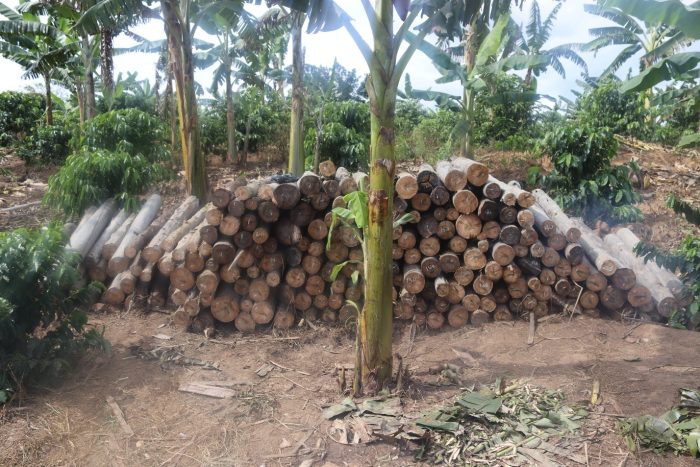
Eucalyptus trees cut from the wetland by communities to enable the wetland function with its natural species.
The exercise has not only improved water flow and soil moisture but also renewed community confidence that restoration is possible when support matches local commitment. The visibility of the work has been amplified by outreach from Community Green Radio. On a recent field visit, members of the station’s outreach team met with Rwabagoma residents to document the conservation process, interview participants, and record community testimonies. Their reporting is being broadcast across central Uganda, highlighting how local action, when supported with the right resources, can reverse environmental degradation.
The combination of equipment provision, voluntary community labor, and media engagement is creating a replicable model for wetland and forest recovery. Beyond the physical restoration, the project is building knowledge, leadership, and a sense of ownership among residents. As the wetlands recover, so too does the community’s resilience to drought and floods, securing both livelihoods and biodiversity for the future.