
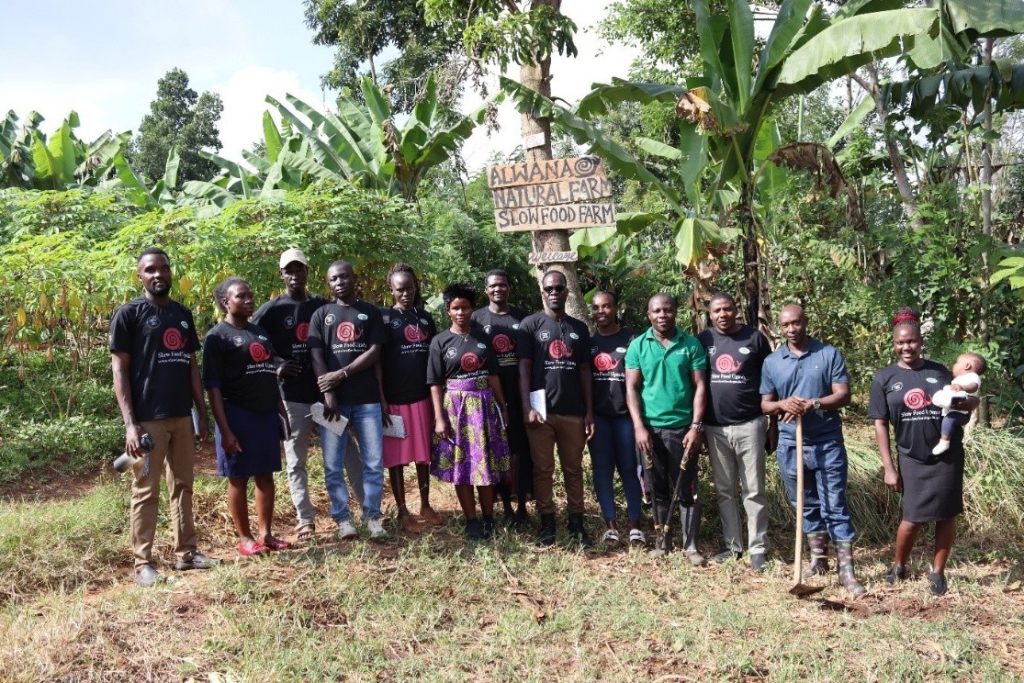



Climate change is changing the way farming is done, making agriculture more difficult because of unpredictable weather, droughts, floods, and declining soil fertility. To address these challenges, it is essential to equip young people with the education, practical skills, and confidence they need to adopt and promote sustainable farming practices that protect the environment while ensuring food security for future generations.
National Association of Professional Environmentalists (NAPE), in partnership with SLOW-FOOD Uganda with support from American Jewish World Service (AJWS) are equipping young people with the knowledge and skills needed to build resilient and sustainable food systems through agroecology. As part of this initiative, youth from Northern and Western Uganda districts of Lira, Alebtong, Hoima, Buliisa, Adjumani, Wakiso, Kikuube representing AJWS upcountry partner groups such as Friends of Zoka Forest, Navigators For Development Association (NAVODA), Alebtong women, Soldarity Uganda, Kwataniza Women Farmers Group (KWG), Kakindo Women Integrated Development Association (KAWIDA) among others are participating in experiential learning visits at the ALWANA–Slow Food Natural Farm in Mukono where they combined classroom learning with practical field experience.
The learning visits formed part of a structured Agroecology Academy that introduces participants to agroecology principles and practices, indigenous knowledge systems, climate change adaptation and mitigation, food education, leadership, value addition, and advocacy. The programme seeks not only to increase technical knowledge but also to nurture young leaders who can inspire change within their communities and contribute to a more sustainable future.
Throughout the training, participants gained hands-on experience in a wide range of agroecological practices, including soil fertility management, organic pest control, water and moisture conservation, seed saving, and climate-smart farming techniques which rely on indigenous knowledge system. These practical sessions demonstrated that healthy soils, biodiversity, and sustainable land management are essential for productive agriculture and long-term food security.
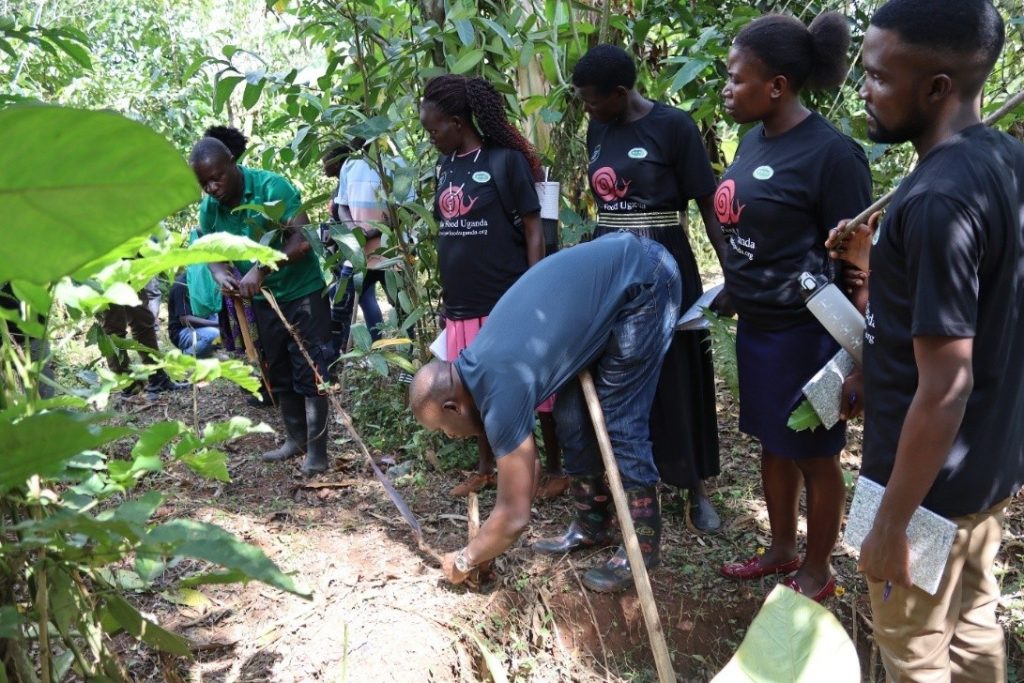
Edward Mukiibi(L) and Rajab Bwengye(R) took the participants through practical demonstration on how to dig contour trenches across a slope to capture rainwater and soil fertility runoff
One of the highlights of the learning visit was a practical session led by renowned agroecology expert Edward Mukiibi, who took the participants across the farm emphasizing on the importance of crop diversification in the farm when it comes to establishing a good agroecological farm adding that soil and water conservation is very key in ecological food production noting that the best practices to be embrace in management of agroecological field is digging multiple horizontal contour trenches across a slope following the contour line to capture rainwater and soil fertility runoff which is distributed across the field instead of it flowing away, He emphasized that sustainable farming depends on maintaining healthy soils and protecting water resources, while also introducing participants to integrated ecological farming systems that combine crops, livestock, and natural ecosystems to maximize productivity through nutrient recycling and efficient resource management.
Participants also deepened their appreciation for indigenous and traditional foods, learning how local food systems contribute to biodiversity conservation, improved nutrition, and climate resilience. By preserving indigenous knowledge and promoting locally adapted food crops, young people can play a significant role in safeguarding Uganda’s rich agricultural heritage while improving household food security.
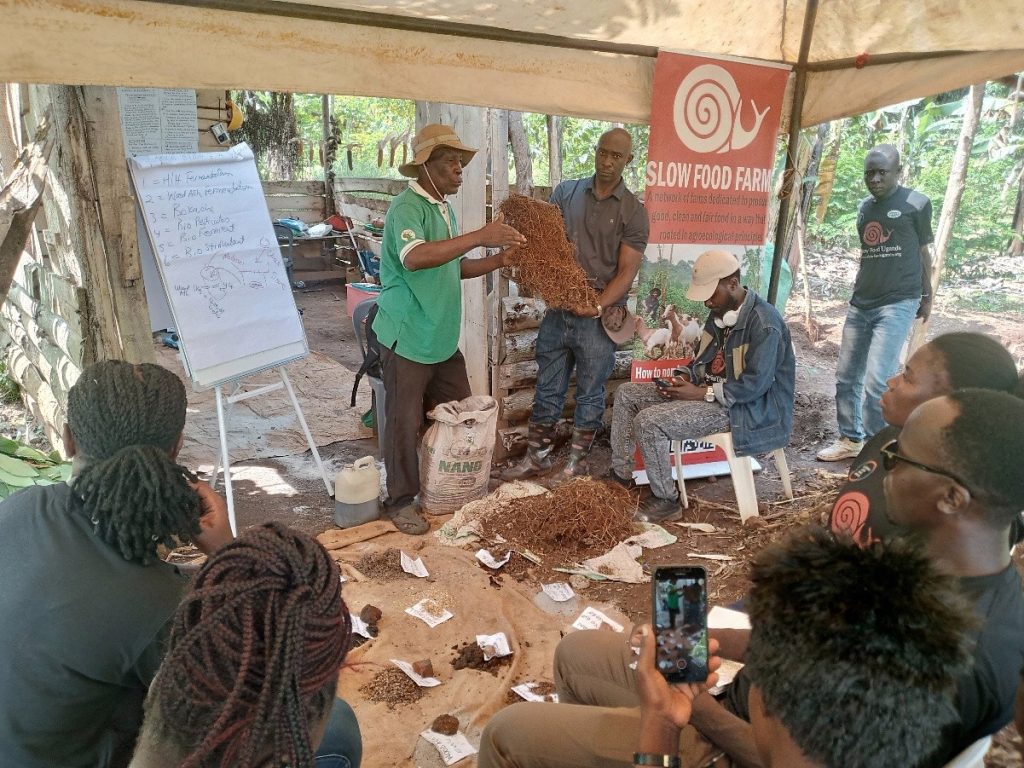
Soil scientist Christopher Wali Magala(on green T-shirt), taking the participants on sustainable soil fertility management using locally available resources.
Another practical session, facilitated by soil scientist Christopher Wali Magala, focused on sustainable soil fertility management using locally available resources. Participants learned how to prepare organic manure using biochar, cow dung, rice husks, and Effective Mountain Microorganisms (EM), providing them with affordable and environmentally friendly alternatives to synthetic agricultural inputs.
Beyond production, the academy also challenged participants to think critically about food consumption. Through discussions on the concept of “Good, Clean and Fair Food,” the youth explored how responsible food choices influence environmental sustainability, public health, and the livelihoods of food producers. They also examined the barriers that often prevent agroecological farmers from accessing fair markets and discussed practical ways of strengthening connections between producers and consumers to ensure that sustainably produced food reaches more households.
A key objective of the programme is to ensure that the knowledge acquired extends far beyond the participants themselves. Each youth is expected to serve as a Trainer of Trainers within their respective communities, using the educational materials and practical skills gained through the academy to educate fellow young people, farmers, and community members. This approach creates a ripple effect, allowing agroecological knowledge to spread widely while strengthening local leadership and community resilience.
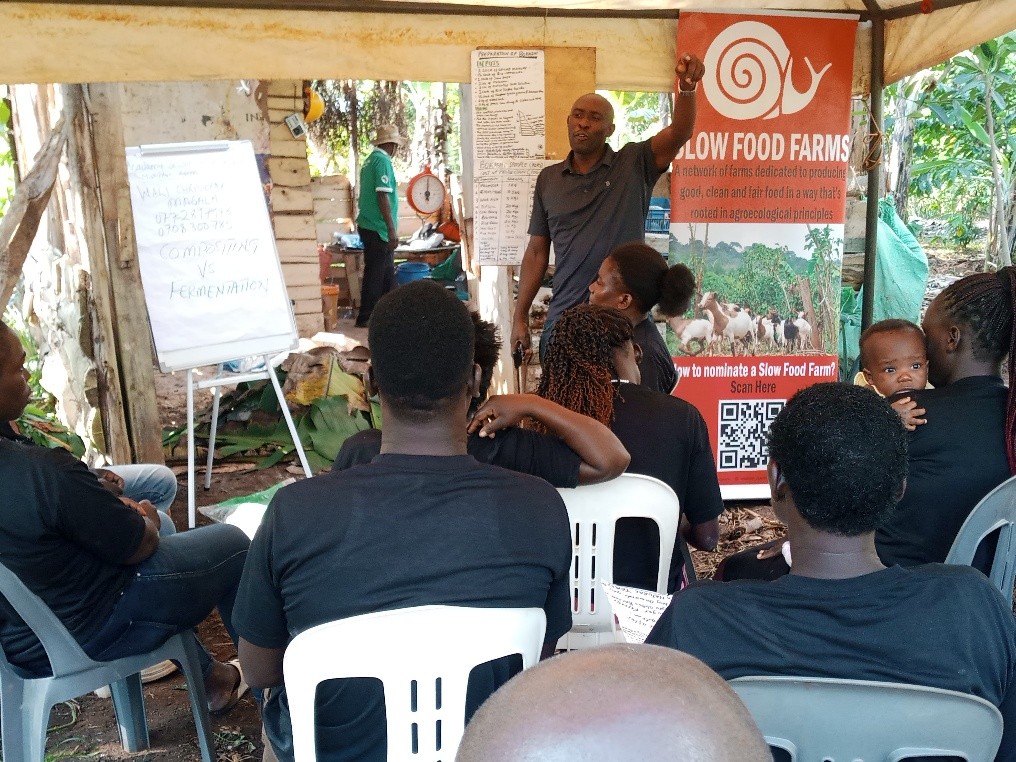
Speaking during the learning visit, NAPE Executive Director Rajabu Bwangye encouraged participants to embrace their role as champions of agroecology and climate action
NAPE Executive Director Rajabu Bwangye encouraged participants to embrace their role as champions of agroecology and climate action. He urged them to return to their communities with confidence and commitment, sharing the knowledge they had acquired and inspiring others to adopt sustainable farming practices. He pledged NAPE’s continued commitment to supporting youth-led agroecology initiatives and commended SLOW FOOD Uganda for its dedication to empowering young people with practical solutions for sustainable food production.
As Uganda continues to experience the impacts of climate change, initiatives that invest in youth leadership, practical learning, and ecological farming offer hope for a more resilient future. By equipping young people with the knowledge, skills, and confidence to lead change, NAPE in partnership with SLOW FOOD Uganda and American Jewish World Service (AJWS) are helping to build a generation that will protect the environment, strengthen food systems, and promote sustainable livelihoods for communities across the country.