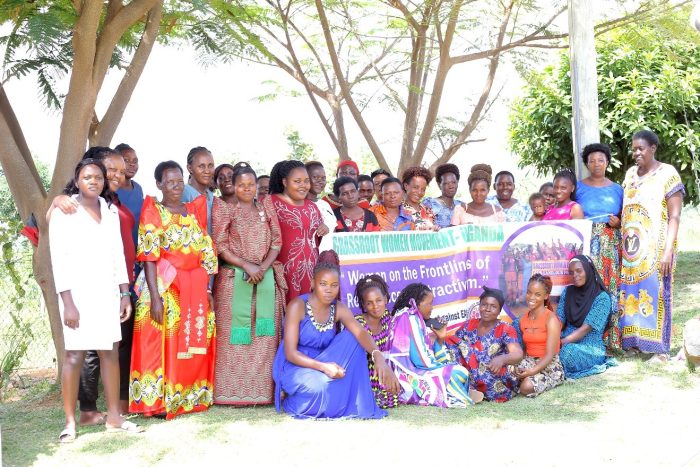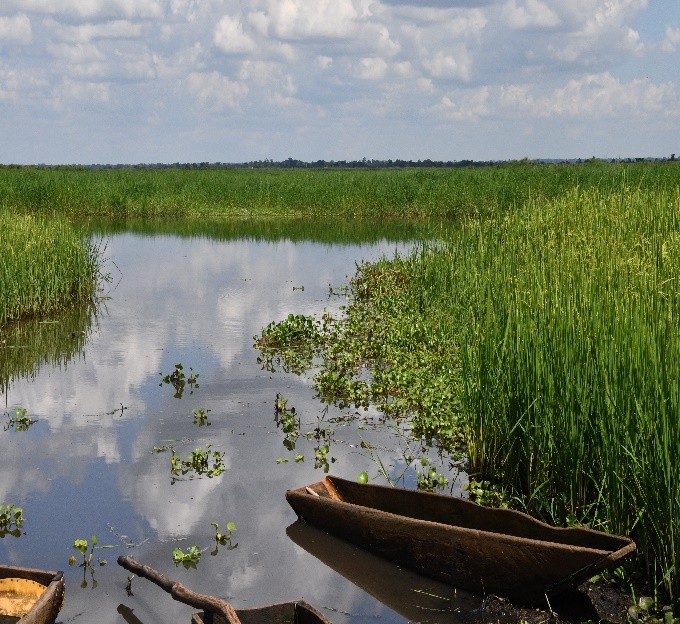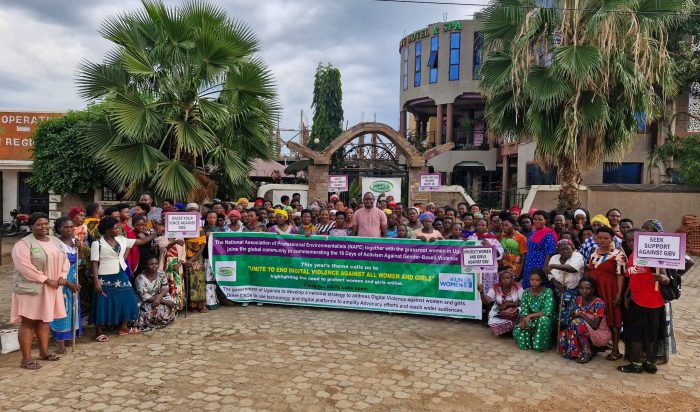
Since June 2025, National Association of Professional Environmentalists (NAPE) with support from Germany based –Partner- (Partner für Klima und Natur gGmbH (PKN) began implementing a project pilot titled “Sustainable Conservation of Nabakazi Wetland Ecosystem for Carbon Sequestration Enhanced Household Food Security and Improved Community Livelihoods in Coffee Producing District of Mubende.” The project aims to restore the degraded Nabakazi wetland which is crucial for biodiversity and climate change mitigation. The project also aims to enhance community livelihoods through sustainable wetland management, restoration of degraded wetland areas, sustainable land use practices and building the capacity of local communities on wetland conservation. The project commenced with a baseline study to identify areas for restoration and this was followed by community outreach, capacity building and sensitization missions on wetland conservation and sustainable agriculture practices along the buffer zones of the wetland.
The project is in direct harmony with Uganda’s National Biological Strategic Action Plan (2025-2030) and the Kunming-Montreal Global Biodiversity Framework goals, the National Determined Contributions (NDCs), the Convention on Biological Diversity (CBD), the Sustainable Development Goals (SDGs) primarily aligned to SDGs 6, 13, 14 and 15. These goals aim to protect ecosystems, combat climate change, ensure clean water and manage marine resources sustainably by 2030.
The baseline was duly done and sanctioned by communities and the district project technical team comprised of NAPE project officers as a formidable working document. For more information about the study findings on Nabakazi wetland, Read more on the link below.
Series of community trainings were conducted in the sub counties of Madudu, Kalonga, Kitenga, Kayebe and Kigando in the villages of Rwabagoma, Kibuyevuuga, Buswabwera Kyabagamba, Kabweyakiza and Rwenyonza with the landlords and tenants on ground to agree on how to progress restoration of the degraded wetland. This took the participation of the project technical committee lead by NAPE with technical support from the district environmental officer, the locals and church leaders. The actual site visitation was conducted with the guidance of communities in the presence of the executive director of NAPE, Mr. Bwengye Rajabu and the Program officer Kureeba David.
Every one’s land was mapped and agreed on what each member or as a community were supposed to do. These meetings targeted those community members whose land was adjacent to the wetland as identified during the baseline study.
THE CONSERVATION ISSUES THAT THE NABAKAZI WETLAND ECOSYSTEM WAS GRAPPLING WITH, AS PER COMMUNITY OUTREACH IN JUNE 2025.
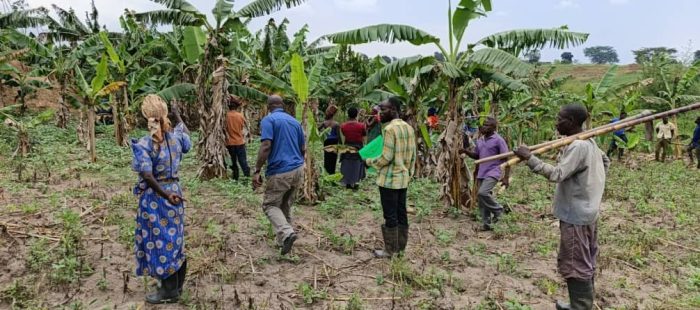
A Banana Plantation planted in the buffer zone eating into the wetland where the owner was advised by the project technical committee to dig terraces to stop nutrient run off into the wetland and most likely introduce coffee trees in the banana plantation for sustainable livelihoods.
The project team during those meetings advised them to restore the degraded parts of the wetland with Napier grass and elephant grass which species would in turn be used as cattle fodder and some people without cows could sell them to those with cows.
Cenchrus purpureus also known as Napier grass, elephant grass or Uganda grass were chosen by communities with advice from the environmental officer as species of perennial tropical grass native to their landscape and generally in the whole region. “Because of having low water and nutrient requirements, it makes good use of uncultivated lands hence best fit for the restoration of degraded wetland.” It was also suggested that communities could develop fish ponds in open areas of the wetland. The wetland boundary had expanded into people’s land affecting the communities neighboring it. According to communities, the wetland had continued to cover/or expand into “their land”, if one revisited the shape files of the 1960s he or she would find that where the wetland had extended to water once settled there. The senior environmental officer Mubende Mr. Lotet Ronald said.
Furtherance to that, the Program officer Kureeba David told them a proverb in their language which says “Amazi gakulukutila gyegali kakulukutidde” literary meaning water passes where or settles where it once passed and that it has a strong memory, it can’t just forget its territory regardless of the level of degradation.
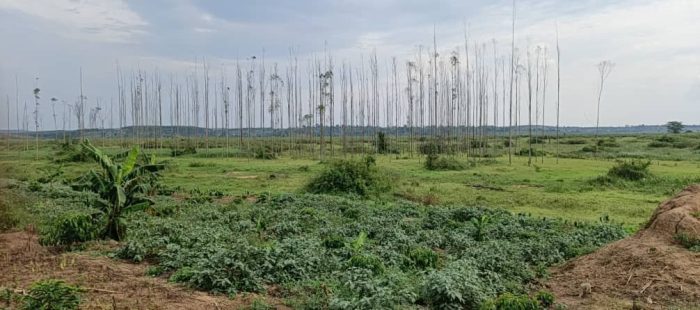
The Eucalyptus trees planted in the wetland to increase the grazing acreage, which the owner was advised to cut to enable the buffer zone regeneration.
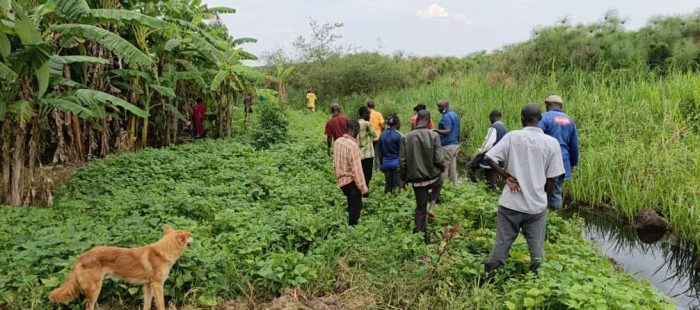
The buffer zone encroached and planted with annual crops like beans which the owner was advised to plant Napier and elephant grass for feeding cows as well using the grass for mulching and selling.
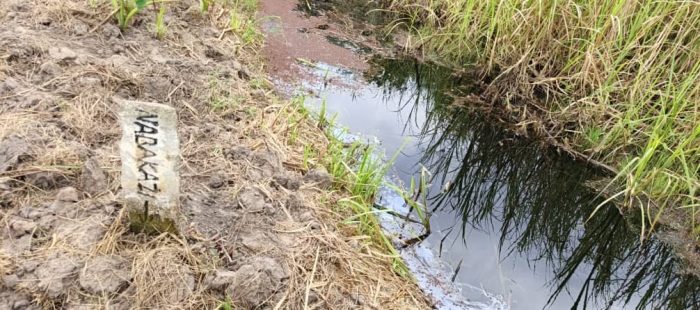
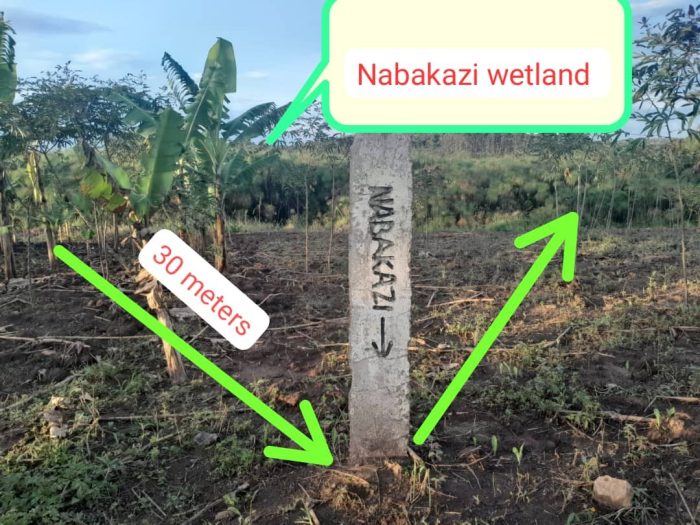
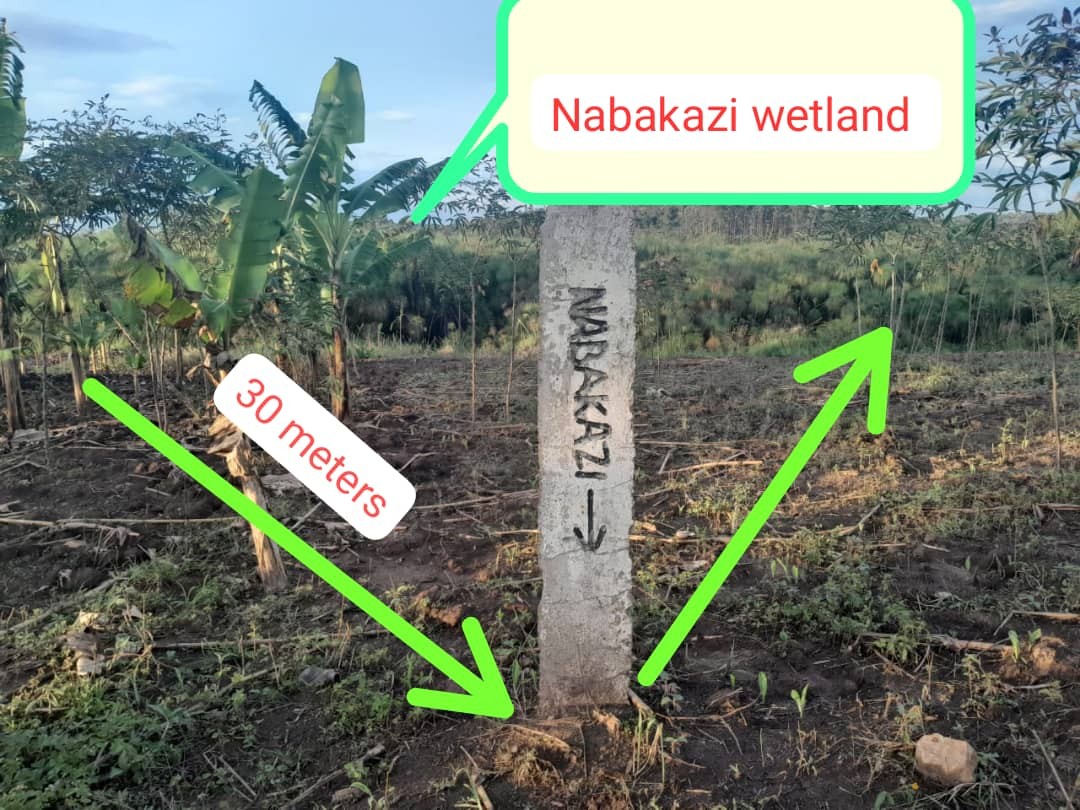
Communities digging beyond the mark stone. They were advised to respect the buffer zone as it is the breeding area for aquatic species like fish. This encroachment was identified in Rwabagoma village.
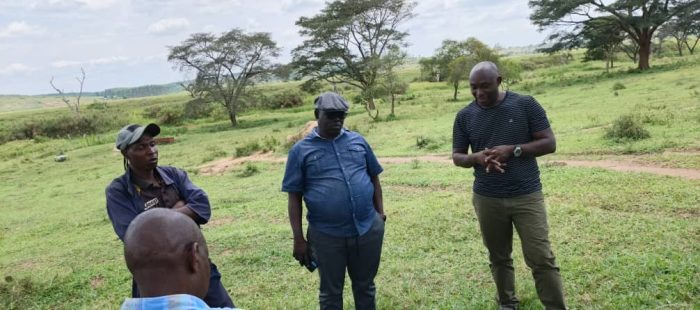
Ronald Lotet, the Mubende Acting Director for Natural Resources (DNRO) explaining the position of government on the swallowed mark stones meant for the buffer area.
He explained that wetlands can be permanent or seasonal, he further said that looking at the shape files of the area in the past years say 1960, one would find already that was a wetland but due to change in seasons the wetland dried and probably people pushed deep into the wetland. He told communities the wetland can expand backwards, if it meets degradation ahead like Nabakazi wetland has a river in between called river Nabakazi which begins from Madudu through the sub-counties of Kalonga and Kitenga until it enters Katonga in Gomba district. So if big developments are established along its course then the wetland tries to occupy its earlier soft spots and it floods first, upstream, midstream and finally downstream.
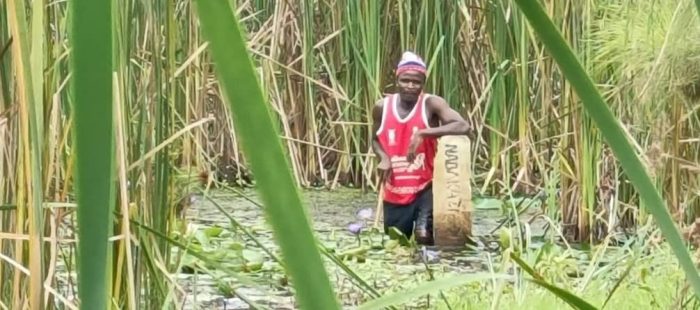
The mark stone in Buswabwera over taken by the wetland due to poor farming methods by adjacent communities.
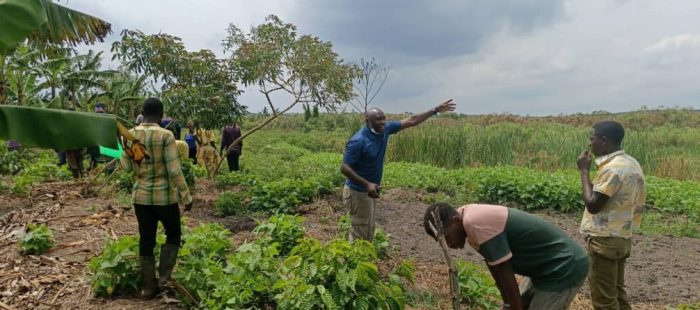
Seasonal farming in the buffer zones identified during the technical team field visit. The main cause of wetland shifts backwards due to silting. The NAPE ED Bwengye Rajabu Yusufu (blue shirt in the middle) and Kureeba David advised communities to maintain the recommended 30 metres from the highest water mark and they could use the buffer for cattle fodder.
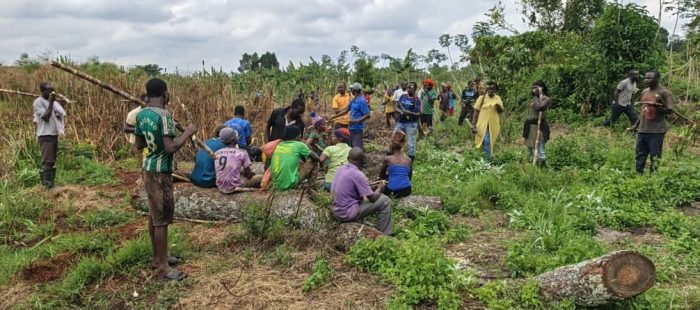
Evidence of riverine forests degradation. A big tree was cut to give way for farming and making charcoal which the chairman LC1 Katumba Julius (blue t shirt with a cup in the middle) which he discouraged in strongest terms.
DURING THE FIELD VISITS AND CAPACITY TRAININGS, THE FOLLOWING ISSUES WERE AGREED WITH COMMUNITIES.
- Cut eucalyptus planted near the wetland and in the wetland.
- Remove yams from the degraded wetland.
- Dig terraces for soil conservation to stop runoff of water with nutrients into the wetland.
- Plant coffee in their land neighboring the buffer.
- Grow elephant grass, Napier grass, lemon grass to be used as cow feeds.
- Respect the buffer zone and only put plants that are compatible with the wetland as well perennial income generating species like fruit trees.
- Avoid using a wetland as a waste dump site.
- Involve the youth and women in the restoration programme.
- Plant pollens generating tree species so as to start on apiary project.
- Construct and protect the water spring in Kabweyakiza in Madudu to improve on water quality supply among the families of six villages (Nabakazi, Kabweyakiza, Kagunguri, Ruraka, Bwiginiro and Kitto).
The above issues were agreed across all the communities where restoration meetings were held and they were promised restoration equipment such as wheel barrows, spades, pangas, hoes, pick axes and planting materials during the subsequent meetings.
Tags: ecosystem, Mubende, Nabakazi, PKN, wetland