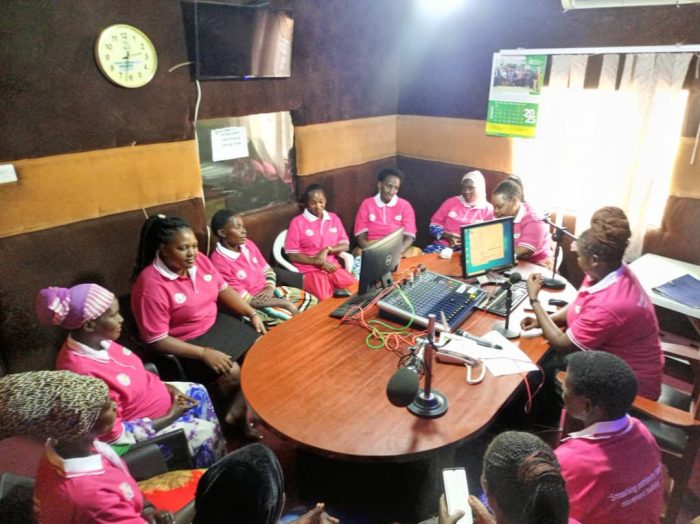
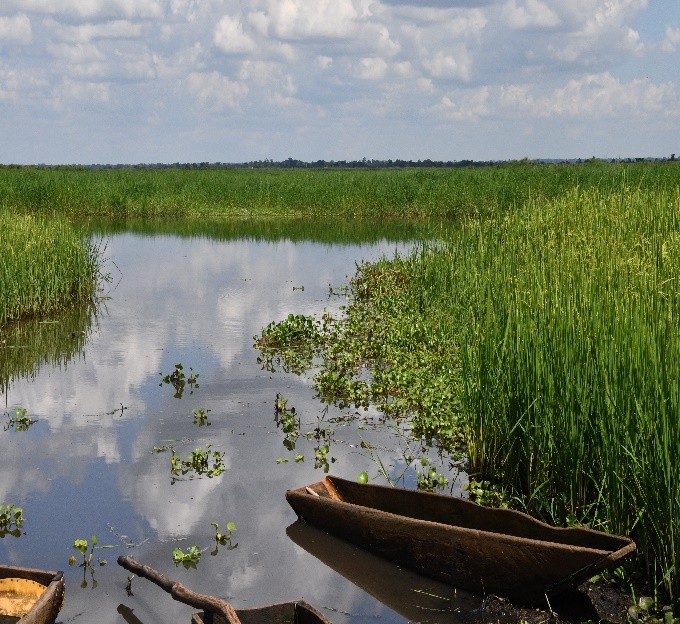
The conservation of the Nabakazi Wetland Ecosystem stands today as a powerful success story of how strategic partnerships, community leadership, and sustainable land management can reverse environmental degradation and restore ecological resilience. What was once a wetland under increasing pressure from encroachment, unsustainable farming, and uncontrolled grazing is rapidly becoming a living example of how conservation and development can progress together. This transformation has been driven by the committed support of the National Association of Professional Environmentalists (NAPE), working hand in hand with the Mubende District Local Government and local communities through a generous partnership and financial support by Partner Fur Klima Und Natur (PKN), an initiative of Hanns R.Neumann Stiftung (HRNS) and Rossmann Beteiligung based in Germany under a conservation and restoration Pilot project titled “Sustainable Conservation of Nabakazi Wetland Ecosystem for Carbon Sequestration, Enhanced Household Food Security and Improved Community Livelihoods in the Coffee Producing District of Mubende” 2025/2026.
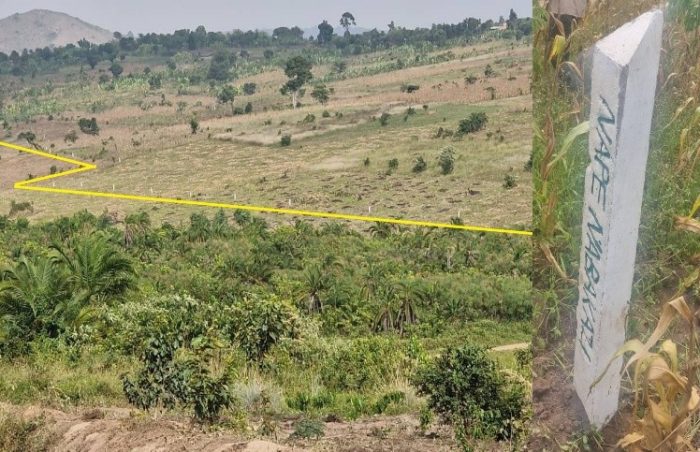
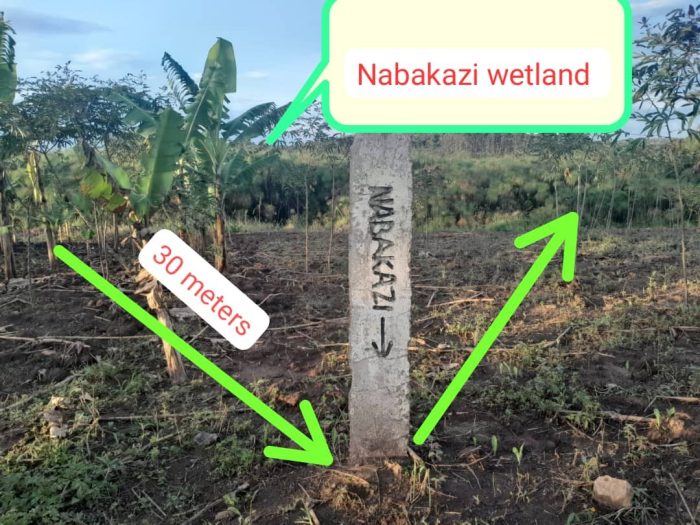
The Power of Buffer Zone demarcation and Planting of Napier/Elephant Grass and Degraded buffers marked with concrete NAPE-NABAKAZI poles along the degraded wetland buffers –January 2026 –More visible along the yellow mark Line
Through this partnership, wetland conservation was reframed from being a restrictive regulatory process into a shared community vision. Local leaders, farmers, pastoralists, women’s groups, and youth were engaged in participatory planning processes that built collective ownership of the Nabakazi restoration agenda and were able to jointly document a comprehensive wetland restoration plan/strategy. As a result, conservation was no longer perceived as an external imposition, but as a locally driven mission to protect a resource that directly sustains livelihoods, water security, and community well-being.
One of the most visible successes has been the establishment and functional protection of wetland buffer zones. Clear demarcation and community-agreed boundaries have restored order to previously contested spaces like breeding areas and food for the Gray Crown Crane (GCC). Areas that were once characterized by conflict and encroachment are now stable, vegetated transition zones that protect the wetland while supporting sustainable community use. These buffers now function as living filters, trapping sediments and pollutants before they reach the wetland interior, leading to visibly improved water clarity and healthier aquatic habitats and this transformation and agreement with communities has been achieved with in a span of 10 months of the pilot implementation with now more than 100 concrete pillar poles plotted to protect the once degraded crested crane breeding sites along the Nabakazi wetland in the sub county of Madudu that has since time memorial been known as the cross roads and there a source of all major rivers and streams feeding the more than 64 km wetland that traverses across 3 districts of Mubende,Kassanda and Gomba feeding into the Katonga wetland ecosystem and draining into the greater lake victoria basin.
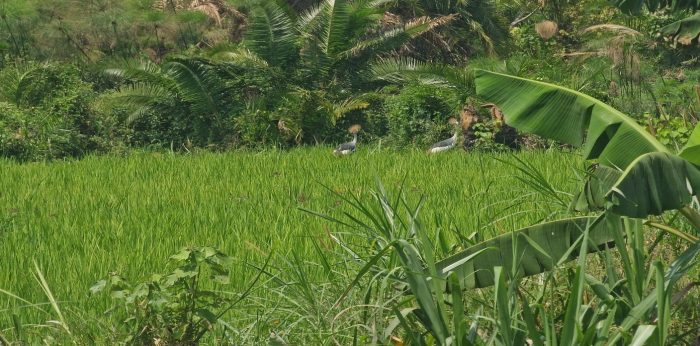
Crane Breeding Site Secured
More importantly, the promotion of sustainable land use practices across the Nabakazi wetland catchment and surrounding households both crop farmers and more prominently cattle farming communities has delivered tangible socio-economic and environmental gains. Farmers who previously struggled with feeding their cows with nutritious grass and resorting to cutting off the wetland to increase their farm acreage and food for their domestic animals are now massively adopting conserving the wetland buffers with friendly ecological practices. Through NAPE’s technical guidance and joint collaboration with Mubende district environment and natural resources department, Erosion-prone farmlands have been stabilized, runoff has reduced, and agricultural landscapes are increasingly becoming resilient to climate variability.
A flagship success within this initiative has been the strategic planting of Napier /elephant grass in and around house hold cattle farms along wetland edges increasing animal food security for the cattle farmers well ensuring that they have abundant nutritious grass for their cattle and therefore no need to continue cutting off the wetland vegetation along their farms. Once degraded and eroding boundaries are now being reinforced by dense, green vegetation of Napier /elephant grass that stabilizes soils, traps sediments, and forms a natural protective barrier around the wetland. This has dramatically reduced siltation and erosion, safeguarding wetland hydrology and water quality and above all, these Napier lots around cattle farms and wetland buffer act as secondary homes for the Grey crowned crane shielding their young and eggs from predators because of their tall growth nature.
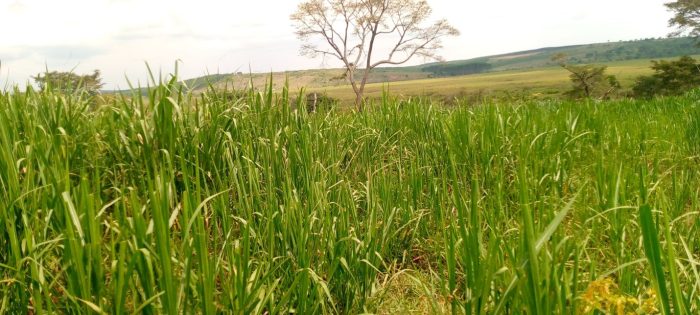
Napier grass growing along Nabakazi wetland buffer-Kitenga Sub county
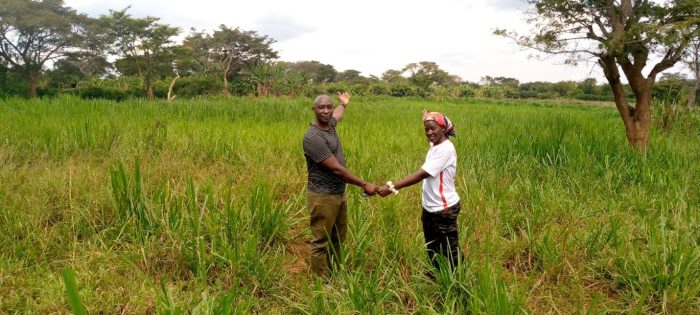
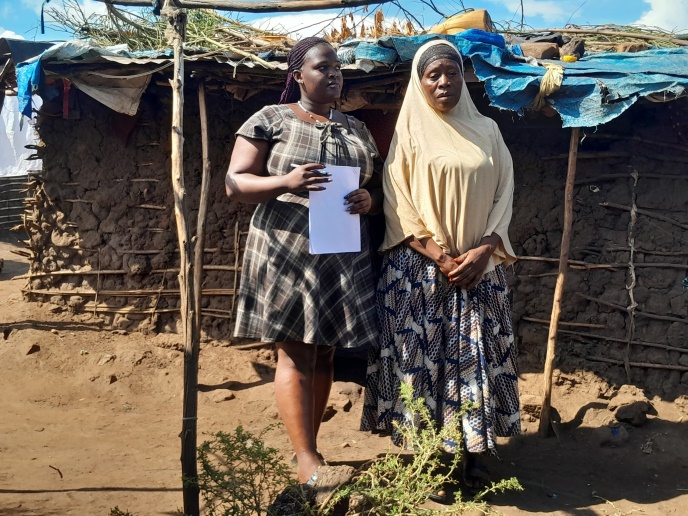
Napier Grass promotion among neighboring cattle farm households along the nabakazi wetland in Kitenga sub county-mubende district. In set is the NAPE Director and a community farmer on the restored farm in Kitenga sub county
Beyond environmental protection, elephant grass has become a symbol of livelihood transformation. Communities now rely on it as a dependable source of livestock fodder, improving animal health, milk production, and household incomes. Women and youth groups have plans to be organized into fodder production and marketing initiatives as this conservation work gains traction in the coming years, creating new income streams and green jobs linked directly to conservation. This rush into Napier/elephant grass growing is also significantly reducing grazing pressure inside the wetland, turning former drivers of degradation into agents of protection.
In conclusion therefore, the NAPE led and PKN supported restoration and conservation pilot is increasingly proving that when communities are empowered, institutions are aligned, and conservation is linked to livelihoods, environmental protection becomes sustainable, scalable, and a SHARED VISION.
Tags: conservation, Mubende, Nabakazi, PKN, wetland