Compiled by Polycarp Omony
The National Association of Professional Environmentalists (NAPE) is empowering women in Uganda’s Albertine region to adopt agroecology as a sustainable solution to growing food insecurity and livelihood challenges caused by the ongoing East African Crude Oil Pipeline (EACOP) and other Oil & Gas infrastructure Developments.
Communities in the Albertine region are increasingly facing food and income insecurity due to the construction of oil infrastructures such as Central Processing Facilities (CPFs), oil well pads, Feeder pipelines among others. Community land has been fenced off following compulsory land acquisition, restricting access to grazing land and water sources for both communities and livestock. Many families have lost farmland, homes, and ancestral land, often receiving delayed, inadequate, or unfair compensation.
Women are particularly affected, as they are the custodians of indigenous seeds and many depend on farming for their livelihoods. In the oil region, many women farmers are heads of households, and the loss of farmland not only undermines their economic stability but also threatens household food security and the preservation of local seed systems. In addition, oil companies are promoting hybrid seeds that cannot be re-planted and are undermining sustainable traditional seed systems which have supported communities for many decades.
These seeds require synthetic chemical inputs such as pesticides which compromise soil health, destroy biodiversity and kill essential soil organisms responsible for aeration and nutrient cycling. This threatens long-term agricultural sustainability and seed sovereignty within local communities.
NAPE with financial support from East African Regional Agroecology Fund (ERAF) is supporting women in the region by promoting sustainable agroecological practices, organizing them into “sustainability agroecology villages,” and strengthening their capacity to advocate for their rights.
Within a duration of 12 months from September 2025, NAPE working closely with upcountry farming groups such as Kakindo Women Integrated Development Association (KAWIDA), Kwataniza Women farmers Group(KWG), Butimba Sustainability Conservation Association (BUSUCA), Kamu-kamu Women Group among others are supporting indigenous farmers on sustainable agroecology food and pest control practices, supporting them to do value addition for better price yields and helping them to establish Agroecology seed banks which will be very key in ensuring that grassroots farmers do not lose their seed rights to Genetically Modified Organisms (GMO) agents currently confusing farmers to take up exotic seeds and animal breeds.
These village-based agroecology hubs serve as centers for learning and demonstration, showcasing agroecological practices such as indigenous seed banking, beekeeping, tree planting, and organic farming. Women farmers are being trained in these practices and supported to replicate them in their own gardens, improving both food security and household incomes.
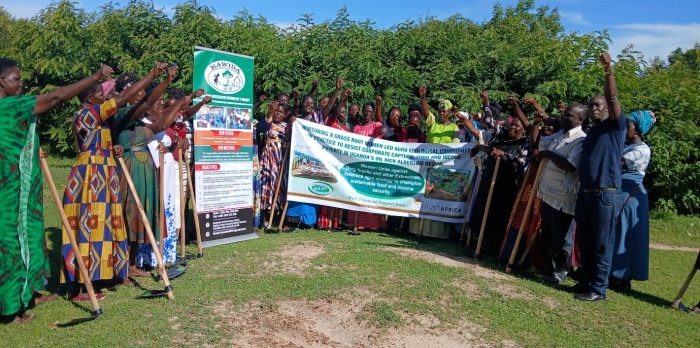
During a recent visit and action research launch to these communities, NAPE’s Executive Director, Mr. Rajabu Bwengye, engaged with several women’s groups, including Kakindo Integrated Women Development Agency (KAWIDA) in Buliisa, Kamu-kamu women groups in Katigambire, Kwataniza Women Farmers Group (KWG) in Hoima, and Butimba Sustainability Conservation Association (BUSUCA) in Kikuube. He encouraged them to work collectively to promote food sovereignty, environmental conservation, and the protection of local rights in the face of oil development pressures.
Leaders of these groups expressed appreciation for NAPE’s continued support. At KAWIDA in Buliisa, women highlighted how agroecology is helping them begin restoring food production despite ongoing challenges attributed by EACOP. They affirmed their readiness to fully embrace sustainable farming practices and kick-start documentation of how the oil and gas sector is devastating their land, food and seed rights.
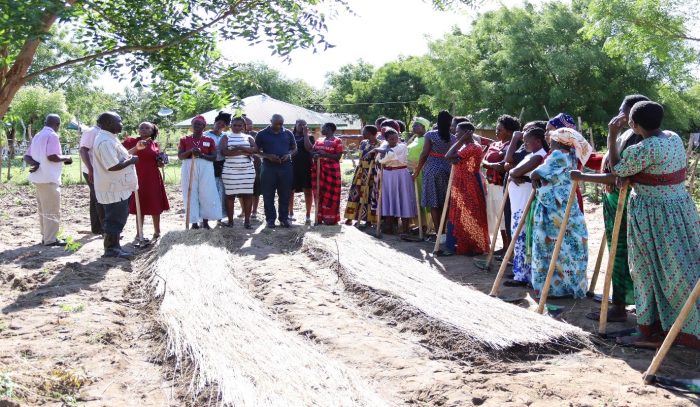
Mr. Wamara Collins (2nd left), an agroecology expert from Kigwera Sub- County in Buliisa training grassroot women farmers on how to prepare seed bed in one of the demonstration gardens in Buliisa District
Local government officials are also being involved in these initiatives. Mr. Wamara Collins, an agroecology expert from Kigwera Sub- County in Buliisa District, emphasized that adopting agroecology can help reduce food insecurity, improve household incomes, and address social issues such as gender-based violence, which is often exacerbated by hunger.
Reverend Fred Musiimenta of Butimba Sustainability Conservation Association in Kikuube District praised NAPE for supporting women affected by oil development. He highlighted initiatives such as beekeeping, tree planting, and seed banking as critical to building resilient livelihoods while conserving biodiversity.
In Hoima District, Mrs. Beatrice Rukanyanga, team leader of Kwataniza Women Farmers Group, noted that the establishment of demonstration gardens and seed banks has enabled women to access and preserve indigenous seeds. She emphasized that agroecology is the most viable pathway for improving livelihoods, strengthening seed sovereignty, and ensuring long-term sustainability.
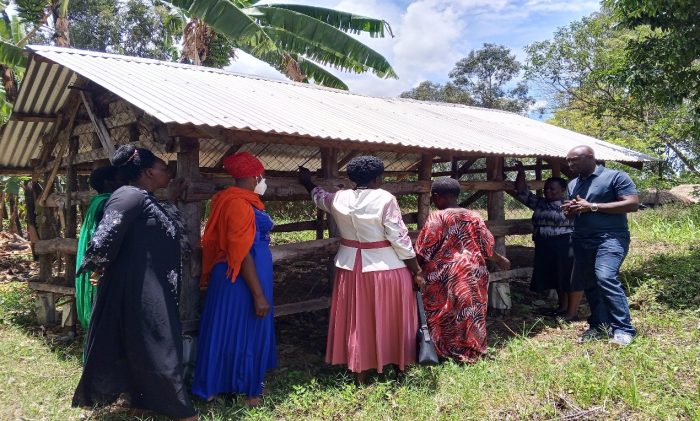
NAPE Director, Mr. Rajabu Bwengye (1st right), inspecting a seed bank established by the Kwataniza Women Farmers Group (KWG), which is enabling women to access and preserve indigenous seeds.
NAPE Executive Director, Mr. Rajabu Bwengye reaffirmed the continued commitment of NAPE in supporting women in oil-affected communities and pledged to continue working closely with local leaders and government authorities to expand agroecology initiatives and ensure that more women benefit from sustainable agricultural practices.
He informed the indigenous farmers that NAPE is committed to ensure that indigenous farmers in the East African Region do not lose the war to corporate capture and is working closely with the East African Regional Agroecology Fund (ERAF) to promote community food sovereignty.
He further noted that, women in the Albertine region working collectively to promote agroecology are not only resisting the negative impacts of extractive industries but are also leading the transition toward resilient, community-driven, and environmentally sustainable food systems.